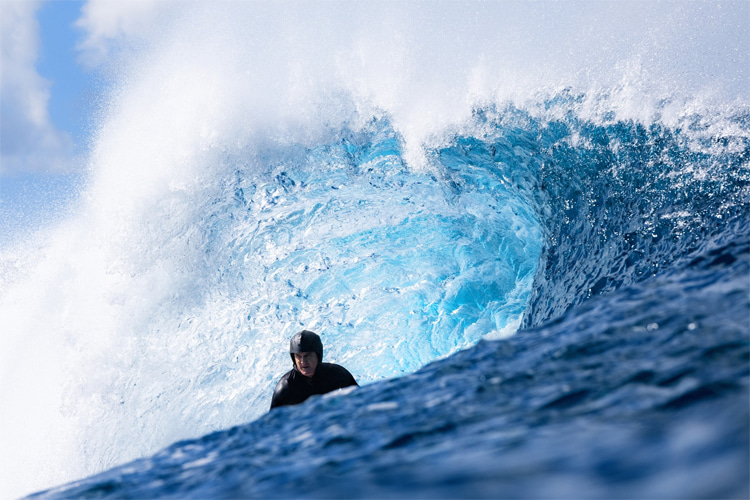

Surf helmets are becoming increasingly popular in today’s lineups. Surfers have realized that the pros of wearing them largely surpass the cons. Here’s how to choose your first head protection gear for the surf.
At the turn of the millennium, the idea of putting on a surf helmet before paddling out was highly embarrassing.
“Only kooks wear surf helmets,” most of the surfers would say.
However, with the growth of big wave surfing and the exploration of new limits for shortboard surfing, accidents, injuries, and even deaths put everything into a new perspective.
How many concussions could we have avoided? How many lives would we have spared? Too many to be neglected.
Everything changes and evolves.
And surfing gear has added incremental layers of safety over the years, whether by adopting inflatable life vests, improving leash technology, or introducing surf watches with GSM and cellular.
Wipeouts are very frequent, and surfers of all levels are pushing the sport to riskier frontiers. So, the use of protective headgear makes all sense, just like in skateboarding.
The surf helmet market is still relatively limited in terms of manufacturers and available models. Nevertheless, there are more than enough quality products to choose from.

Head shape and fit: the single most important detail
So, what are the most important details you should consider when investing in a surf helmet?
The first thing you need to know is that a helmet only protects if it fits.
Gladly, surf helmets come in different internal shapes – some are built for oval heads and others for rounder heads.
A helmet that feels snug around the forehead and temples but not tight on the skull is right.
Here’s a simple test you could do: try a few sizes and spin your head. A helmet that shifts a lot will not behave well in an impact.
It’s really crucial to have in mind that some models fit certain head shapes better than others.
For example, a helmet could be light and low-profile but can feel stiff and better for oval heads, while another feels boxier and bulkier for a few surfers.
So, try them out at a good surf shop near you.

Helmet formats and how they change behavior in the water
There’s another characteristic that matters in surf helmets. Basically, there are two broad visual styles: bucket/low-profile helmets and full-coverage/chunkier helmets.
Bucket/low-profile helmets look like a slim cap. They sit low on the head and try to limit bulk so you can hear and move naturally.
Low-profile designs lower drag and reduce the risk of a heavy helmet whipping the head on a sudden stop.
Oakley’s WTR Icon is an example of this approach as it uses a lightweight shell and open-vent geometry.
Full-coverage/chunkier helmets add more material around the skull and sometimes over the ears.
More material can mean more impact-absorbing volume, but also more weight and heat. Some surfers who ride shallow reefs prefer this style for added protection.
Gath’s EVA Hat and BangProof bucket helmets are examples that emphasize heavier-duty shells and thicker liners.
Here’s the trade-off you should be aware of: heavier helmets can absorb more energy, but some surfers warn that bulky helmets increase neck strain during face-first impacts.

What the shell and liner are made of
Most surf helmets’ shells are made from hard plastic ABS and UV-stable impact plastics. These shells resist cuts and abrasion from boards and reefs.
Some models add slip-layer technology or a separate low-friction layer to reduce rotational forces.
Brands advertise that slip layers help decouple rotational energy, which can lower concussion risk.
As for the liners and core materials, EVA and multi-impact foams are common. Non-water-absorbent EVA foams resist water absorption and give multi-hit performance.
There are also manufacturers who use proprietary or “shear-hardening” foams and non-Newtonian inserts that respond differently under high-speed impact in key places for extra protection without bulk.
Soft-shell or cloth-covered bump caps are also available, but they typically offer less impact attenuation than molded shell helmets.
Make sure to avoid purely cosmetic or fabric bump caps if your goal is real protection.

Ears, ventilation, and comfort
A surf helmet that feels comfy generally has removable or adjustable ear cups to give you a choice between hearing and extra side protection.
It makes sense, right? That’s why a few manufacturers designed models that offer removable earpads so you can tune the feel.
Then, do know that open-vent designs let water pass and reduce suction and heat. Low-profile helmets often have better airflow.
Surfers report that some EVA models can get warm in tropical water, while lighter models feel cooler and less intrusive.
Lastly, we would like to underline that many surfers plan to wear a helmet over a neoprene hood in winter.
If it’s your case, make sure the helmet’s sizing accounts for the extra thickness. It’s a detail that could be relevant.

Price and what you get
If you’ve decided to proceed and purchase a surf helmet, expect a wide range of prices and not many manufacturers.
Surf Skull, Gath, BangProof, Hyda, and Oakley dominate the market with around 20 different models.
As for entry and low-cost options, low-profile, soft-shell, or simpler bucket caps can be around $95-$129.
Mid-range models, like classic EVA bucket helmets, often sit around $150-$180.
Premium surf helmets with D3O inserts or advanced fit systems can reach $170-$200 or more.
Price is only one variable. If a helmet includes independent test data, a slip layer, or a brand warranty, factor those into value.
Some brands list crash-replacement policies and warranties. Check each maker’s support and return rules.
Extra tips
Time for a few final details that might be useful.
Unfortunately, there is no single universal standard for surf helmets, like there is for bicycle helmets.
However, EN 1385 is the European standard for helmets for whitewater and similar water sports, and some surf helmet makers reference that standard.
Also, Virginia Tech’s Helmet Lab publishes whitewater helmet ratings using a STAR evaluation, and their testing includes rotational metrics that actually apply to surfing.
As a practical buying suggestion, we would advise you to measure your head circumference and compare it to each brand’s chart.
Remember to decide if you want removable ear cups or permanent coverage – swappable cups add versatility, but could not be a thing you prioritize.
Also, factor in the conditions you surf the most. Warm tropical water calls for lighter, better-ventilated helmets, and shallow reef breaks often push surfers toward thicker, higher-coverage shells.
Surfers who wear helmets stress that how you fall matters and that these casques are never 100 percent protective against head injuries.
For instance, if you slam a coral or rocky bottom face-first, they might not prevent injuries.
Words by Luís MP | Founder of SurferToday.com
Leave a Reply